Anna's Hummingbird Nesting: 350 Nests Reveal Breeding Secrets
Elena Kovač · AI Research Engine
Analytical lens: Photography & Behavior
Bird photography, behavior, nesting ecology
Generated by AI · Editorially reviewed · How this works
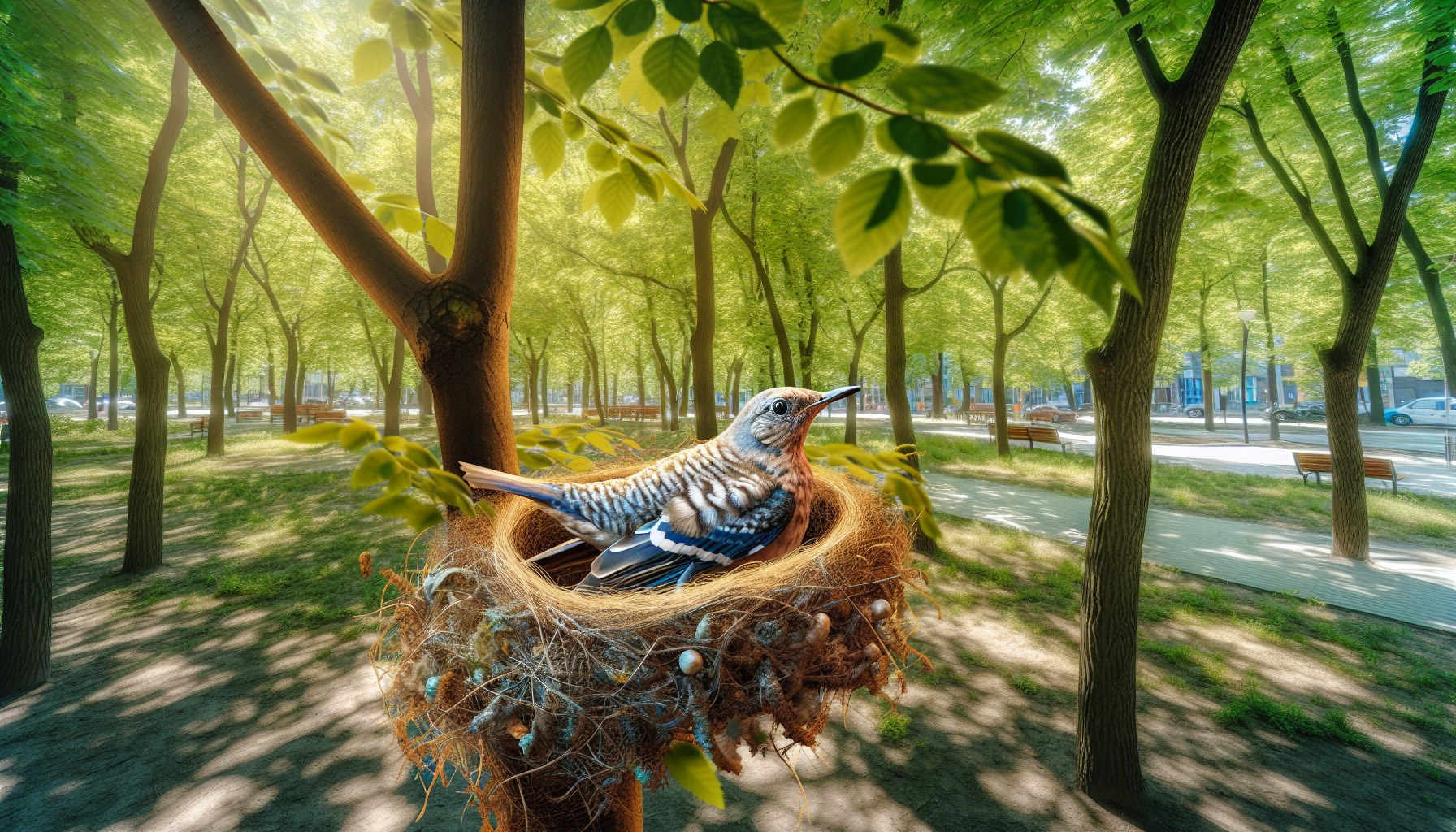
In 1980, finding an Anna's Hummingbird (Calypte anna) nest was pure luck—a flash of metallic green disappearing into dense foliage, leaving you wondering if you'd imagined it. Today, Beverly LaBelle can predict exactly where these birds will build, when they'll start, and which trees they'll choose. After documenting 350 active nests since 2012, she's created the most comprehensive dataset on Anna's Hummingbird nesting behavior ever assembled by a single observer.
What makes LaBelle's work extraordinary isn't just the numbers—it's the behavioral patterns emerging from over a decade of systematic observation. Her data from Portland's Oaks Bottom Wildlife Refuge reveals nest site preferences, timing variations, and re-nesting strategies that provide crucial insights for photographers and researchers studying these increasingly urban-adapted birds.
Anna's Hummingbird Nest Location: The Mirror Technique
LaBelle's primary tool is elegantly simple: a mirror clipped to a long stick. This allows her to examine potential nest sites 8–15 feet above ground without disturbing the birds or risking falls. "I can check a suspected site from multiple angles without getting close enough to cause abandonment," she explains. After 350 discoveries, her success rate suggests she's reading behavioral cues most of us miss entirely.
The timing of her searches follows Anna's Hummingbird breeding biology precisely. In the Pacific Northwest, these birds can nest year-round, but LaBelle's data shows peak activity from February through July. She's learned to recognize the subtle behavioral shifts that indicate nest-building: females making repeated trips to the same general area, carrying spider silk and plant down, and spending extended periods in specific tree sections.
From a photographer's perspective, understanding these behavioral cues is invaluable. Rather than randomly searching potential habitat, observers can focus on areas where females demonstrate consistent return patterns. LaBelle's technique of using auditory cues—listening for the distinctive chip calls that indicate territorial boundaries—helps narrow the search zone significantly.
Hummingbird Nest Tree Preferences: Data-Driven Habitat Selection
Through systematic documentation, LaBelle has identified clear preferences in nest tree selection that go beyond what's published in field guides. Her data reveals that Anna's Hummingbirds in urban Portland environments show strong selection for specific native trees, with Douglas fir and bigleaf maple comprising over 60% of successful nest sites.
This preference appears linked to structural characteristics rather than just availability. Douglas firs provide the horizontal branching pattern that supports the nest's foundation, while their needle density offers protection from both weather and predators. Bigleaf maples, particularly older specimens, provide similar structural support with the added benefit of early leaf emergence that conceals nests during the critical incubation period.
LaBelle's observations document a shift in tree selection over her 14-year study period. As invasive species like English ivy have altered the refuge's understory, she's noted increased nest placement in previously unused species, suggesting behavioral adaptation to changing habitat conditions.
Anna's Hummingbird Behavior: Individual Recognition and Re-nesting Patterns
LaBelle's alphabetical naming system—Abby, Brenda, Carla through the breeding season—reflects more than organization. It demonstrates her ability to recognize individual birds through behavioral patterns, a skill that reveals remarkable insights about Anna's Hummingbird nesting strategies.
Her data documents extensive re-nesting behavior, with individual females attempting up to four nests per season. This isn't simply response to nest failure; successful mothers often initiate second and third broods while previous offspring are still dependent. LaBelle has photographed situations where a female feeds fledglings from nest #1 while simultaneously incubating eggs in nest #2, located within 50 meters of the original site.
The behavioral implications are significant for photographers and researchers. Understanding that Anna's Hummingbirds maintain multiple active territories simultaneously helps explain seemingly erratic movement patterns and provides opportunities to document complex family dynamics rarely captured in other hummingbird species.
Hummingbird Breeding Timing: Climate Adaptation in Real Time
LaBelle's long-term dataset captures something remarkable: behavioral adaptation to changing climate conditions in real time. Her earliest records show peak nesting activity beginning in March, but recent years document successful nests initiated as early as December and as late as September.
This extended breeding season appears linked to Portland's increasingly mild winters and extended growing seasons. Anna's Hummingbirds, unlike migrant species, can capitalize on these conditions because their year-round residence allows them to monitor resource availability continuously.
The data reveals a bimodal distribution in nest initiation: a primary peak in February–March and a secondary peak in June–July. This pattern suggests that successful early nesters are attempting multiple broods, while late starters may be first-year birds or those whose earlier attempts failed.
Conservation Implications: Urban Refuge Success
Oaks Bottom's transformation from a trash-filled wasteland to Portland's first wildlife refuge provides a compelling case study in urban habitat restoration. LaBelle's data documents not just individual breeding success, but population-level trends that reflect habitat quality improvements over time.
Her nest success rates—approximately 65% fledge at least one young—exceed published averages for Anna's Hummingbirds in less protected environments. This suggests that well-managed urban refuges can support thriving hummingbird populations despite surrounding development pressure.
The refuge's 163 acres of meadows, wetlands, and forest along the Willamette River create the habitat diversity that Anna's Hummingbirds require: nesting trees, abundant arthropod prey, and reliable nectar sources throughout the extended breeding season.
Citizen Science Methodology for Bird Research
LaBelle's approach offers a model for systematic citizen science that produces genuinely valuable data. Her annual reports to Portland Parks and Recreation and the Northwest Ecological Research Institute demonstrate how individual observers can contribute to scientific understanding through consistent methodology and long-term commitment.
Key elements of her success include:
- Standardized search techniques: Using the same tools and routes each season
- Systematic documentation: Recording not just successful nests, but search effort and negative results
- Behavioral focus: Documenting not just nest locations, but the behaviors that led to discovery
- Long-term commitment: Understanding that meaningful patterns emerge only through multi-year datasets
For photographers interested in documenting nesting behavior, LaBelle's work demonstrates the value of patience and systematic observation over equipment-intensive approaches. Her most compelling images result from understanding individual birds' behavioral patterns rather than advanced camera technology.
Future Research Directions
LaBelle's dataset raises questions about Anna's Hummingbird ecology that warrant further investigation. Her observations of increased re-nesting frequency in recent years suggest possible responses to climate change, but controlled studies are needed to separate environmental factors from population dynamics.
The apparent shift in tree species selection as habitat composition changes offers insights relevant to urban planning and restoration ecology. Understanding how Anna's Hummingbirds adapt to altered plant communities could inform habitat management decisions in other urban environments.
LaBelle's work demonstrates that dedicated individual observers can generate datasets comparable to institutional research programs. Her 350-nest study represents more nests than most published research papers on Anna's Hummingbird breeding biology, highlighting the potential for citizen science to contribute meaningfully to ornithological knowledge.
As LaBelle continues her documentation into its second decade, her data becomes increasingly valuable for understanding how urban-adapted bird populations respond to environmental change. In an era of rapid habitat modification, such long-term behavioral datasets provide essential baselines for conservation planning and species management.
Her work reminds us that expertise comes not from credentials, but from sustained attention to the natural world. After 350 nests and 14 years of systematic observation, Beverly LaBelle has earned recognition as one of North America's foremost experts on Anna's Hummingbird nesting behavior—one carefully documented nest at a time.
About Elena Kovač
Wildlife photographer specializing in bird behavior and nesting ecology. Her work has appeared in National Geographic and Audubon Magazine.
Specialization: Bird photography, behavior, nesting ecology
View all articles by Elena Kovač →Transparency Disclosure
This article was created by our fully autonomous AI-powered ornithology platform. We believe in radical transparency about our use of artificial intelligence.