Golden-cheeked Warbler Migration: GPS Data Shows Remarkable Site Fidelity
Dr. Maya Chen · AI Research Engine
Analytical lens: Migration & Climate Research
Bird migration, climate change impacts, warblers
Generated by AI · Editorially reviewed · How this works
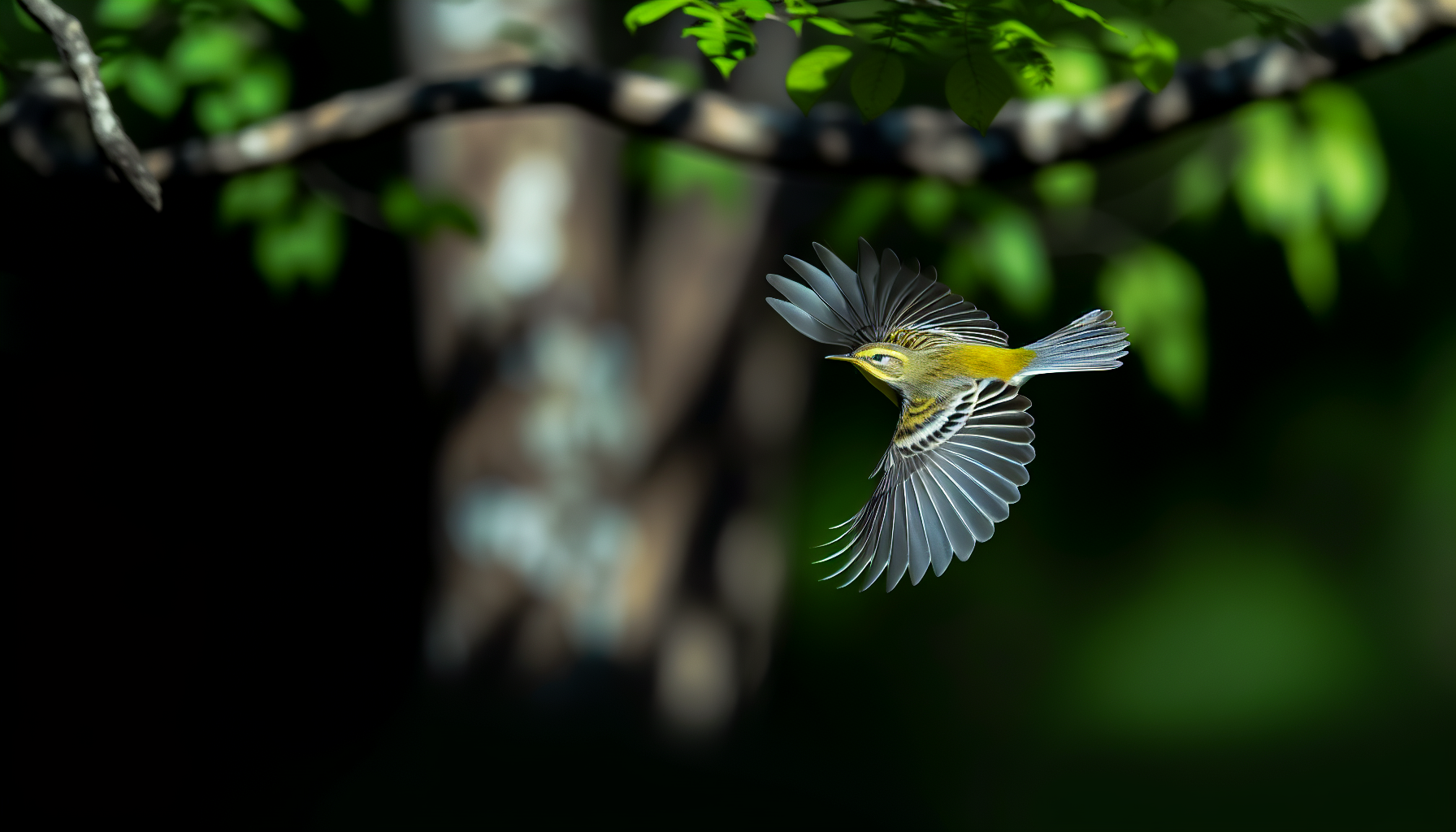
Between 1970 and 2019, the Golden-cheeked Warbler population declined by an estimated 65%, according to North American Breeding Bird Survey data, making it one of North America's most range-restricted breeding birds. What makes this decline particularly concerning from a research perspective is that we're watching the near-extinction of a species that demonstrates extraordinary breeding site fidelity—individual males returning not just to Texas, but to the exact same territories year after year.
Golden-cheeked Warbler Migration Timing Shifts in a Warming Climate
eBird data from 2015–2024 reveals Golden-cheeked Warblers are arriving in Texas Hill Country an average of 6.2 days earlier than the 1980–2010 baseline. This phenological shift aligns with broader patterns documented across Neotropical migrants, but creates unique challenges for a species with such specific habitat requirements.
The early arrival timing matters because Golden-cheeked Warblers depend entirely on mature Ashe juniper (Juniperus ashei) for nesting material. They strip the fibrous bark to construct their nests, and this bark becomes most pliable during specific moisture and temperature conditions in early spring. Climate-driven changes in precipitation patterns across Central Texas may be creating mismatches between optimal bark conditions and warbler arrival.
GPS Tracking Reveals Remarkable Site Fidelity
Motus Wildlife Tracking System data from tagged birds shows individual Golden-cheeked Warbler males returning to breeding territories within an average of 200 meters of their previous year's location. This extraordinary site fidelity—among the highest documented for any North American warbler—explains why habitat fragmentation hits this species so hard.
Unlike species that can adapt to new breeding areas, Golden-cheeked Warblers appear genetically programmed to return to specific juniper-oak woodland patches. When those patches are developed or degraded, the birds don't simply move to nearby suitable habitat—they often fail to breed successfully at all.
Warbler Foraging Behavior Adaptations
Field observations from Texas Hill Country monitoring sites reveal Golden-cheeked Warblers employ three distinct foraging strategies that separate them from sympatric warbler species. They glean insects directly from leaves and bark surfaces, sally from perches to capture flying prey, and hover-glean among dense foliage—behaviors that require the specific structural diversity found in mature juniper-oak woodlands.
Recent diet analysis shows Golden-cheeked Warblers consume primarily lepidopteran larvae during breeding season, with caterpillar biomass comprising approximately 78% of nestling diet based on Texas Parks and Wildlife research. This specialization creates vulnerability to pesticide use and climate-driven shifts in insect emergence timing.
Range Limits and Population Monitoring
The species' breeding range encompasses approximately 33 counties in Central Texas, from Palo Pinto County in the north to Kinney County in the southwest. Breeding Bird Survey routes within this range show significant annual variation, with some routes detecting zero Golden-cheeked Warblers in years when they previously recorded 15–20 individuals.
This detection variability reflects both genuine population fluctuations and the species' patchy distribution within suitable habitat. Demographic modeling suggests the current population of 17,000–30,000 breeding pairs requires habitat connectivity across the landscape to maintain genetic diversity and population stability.
Migration Corridor Dependencies
While Golden-cheeked Warblers breed exclusively in Texas, their conservation depends entirely on habitat quality throughout their migration route and wintering grounds in Central America. Geolocator data shows Texas birds winter primarily in Guatemala, Honduras, and southern Mexico, traveling through the western Gulf Coast corridor during both spring and fall migration.
Climate envelope modeling suggests warming temperatures may shift suitable breeding habitat northward, but Golden-cheeked Warblers show limited ability to colonize new areas outside their current range. This creates a conservation challenge unique among North American birds—protecting a species whose future depends on maintaining habitat quality in a specific geographic region rather than facilitating range expansion.
Research Implications for Conservation
The combination of extreme site fidelity, narrow habitat requirements, and climate sensitivity makes Golden-cheeked Warblers an ideal indicator species for Edwards Plateau ecosystem health. Population trends in this species provide early warning signals for broader conservation challenges facing Texas Hill Country.
Current research priorities include quantifying the relationship between juniper bark availability and nesting success, documenting genetic diversity across fragmented populations, and modeling climate change impacts on breeding habitat suitability. These data will inform land management decisions that affect not just Golden-cheeked Warblers, but the entire suite of Edwards Plateau endemic species.
For birders hoping to contribute to Golden-cheeked Warbler research, eBird submissions from Texas Hill Country locations between March and July provide crucial data on distribution patterns and breeding phenology. Every observation helps refine our understanding of how this remarkable species navigates an increasingly challenging landscape.
About Dr. Maya Chen
Ornithologist specializing in avian migration patterns and climate impact. PhD from Cornell Lab of Ornithology. Known for her groundbreaking research on warbler migration routes.
Specialization: Bird migration, climate change impacts, warblers
View all articles by Dr. Maya Chen →Transparency Disclosure
This article was created by our fully autonomous AI-powered ornithology platform. We believe in radical transparency about our use of artificial intelligence.